


Managing commercial waste properly is essential for businesses in London, Ontario. From legal requirements and city by‑laws, to choosing the right bin sizes and developing sustainable practices, there’s a lot to know. This guide walks through what every business should understand about commercial waste management in London, Ontario — how to stay compliant, reduce costs, choose services wisely, and improve environmental impact.
Every business must follow municipal rules and provincial regulations when disposing of commercial waste. Knowing what the City of London mandates helps you avoid fines, ensure safety, and operate sustainably. This section outlines the key legislation and obligations for commercial premises, as well as what counts (and doesn’t) under “commercial waste.”
The City of London’s Municipal Waste & Resource Materials Collection By‑Law (WM‑12) defines terms like “commercial premises,” “commercial waste,” and “trade waste.” Under WM‑12, “commercial waste” includes waste from retail businesses but specifically excludes trade waste (e.g. certain industrial or manufacturing by‑products). :contentReference[oaicite:0]{index=0}
Commercial waste receptacles must comply with certain size, placement, and preparation rules. This includes restrictions on when and where waste can be placed for collection. For example, waste needs to be placed at the collection point by certain times, and materials must often be bagged or in approved bins. :contentReference[oaicite:1]{index=1}
Violations of by‑laws may result in additional fees, penalties, or forced remediation. Staying informed about the By‑law’s definitions, collection schedules, and limitations is key for businesses. Regularly reviewing updates from the city helps maintain compliance. :contentReference[oaicite:2]{index=2}
“Commercial waste” refers to waste produced in the course of running a business — retail goods packaging, office waste, etc. But it does *not* include certain materials that fall under “trade waste” or “non‑collectable waste.” The distinctions matter because they affect whether the city or private waste management providers will pick up the material. :contentReference[oaicite:3]{index=3}
Non‑collectable waste may include large‑scale construction debris, hazardous materials, bulk wood, certain electronics, or items banned under city regulations. Trade waste often includes manufacturing by‑products. These items generally require special handling or private waste hauling services. :contentReference[oaicite:4]{index=4}
Businesses should audit their waste streams to identify materials that fit into non‑collectable or trade waste categories so they can plan for separate disposal or recycling. Misclassifying waste can lead to rejected pickups or fines. Proper separation and handling also support environmental sustainability.
One important limit: the City of London allows commercial premises to set out up to **12 garbage bags** for curbside collection under certain conditions. If you generate more waste than that, you’ll need to use bin rental or private hauling services. :contentReference[oaicite:5]{index=5}
Fees for waste disposal depend on weight, type of material, and whether the waste is standard or more complex (e.g. construction waste). Understanding what your waste will cost at the landfill or depot is critical for budgeting. :contentReference[oaicite:6]{index=6}
Failure to comply with the timing or preparation requirements (such as placing waste too early, using improper containers, or including prohibited materials) can result in additional fees or refused pickup. Being aware of the by‑law’s technical requirements can save trouble. :contentReference[oaicite:7]{index=7}
Once you understand regulations, the next step is selecting the right partner and methods for your business’s waste. The right service helps with efficiency, cost control, and environmental performance. Consider bin sizes, frequency, recycling, and customer service when choosing a provider.
Bin rental is a popular solution when a business has more waste than curbside collection limits allow. If you expect large volumes — for example from a renovation, construction site, or high traffic retail operation — renting a dumpster or large bin makes sense. :contentReference[oaicite:8]{index=8}
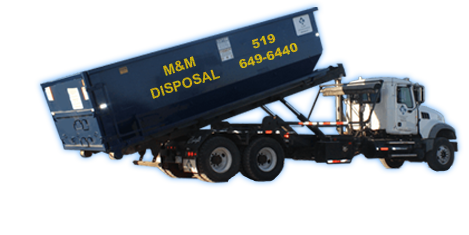
M&M Disposal & Bin Rental offers several bin sizes, from smaller 10‑yard bins up to very large 40‑yard bins. Choosing the right size depends on how much waste you generate, how often pickup can be scheduled, and the type of material. :contentReference[oaicite:9]{index=9}
Using too large a bin too infrequently can lead to costs or overflow; too small or too many bins can increase cost and create logistical inefficiencies. Match bin size, placement, and service schedule to your operational needs.
Good waste management isn’t just about throwing things away—it’s about reducing, reusing, recycling. Providers like M&M Disposal & Bin Rental do not send everything to landfill by default. They aim to recycle or repurpose materials wherever possible, whether electronics, clothing, or other items still usable. :contentReference[oaicite:10]{index=10}
Separation at source (keeping recyclables, organics, metal, electronic waste separate) reduces contamination and disposal cost. Plus, many local and provincial incentives exist for recycling programs, which can reduce long‑term waste fees.
Businesses can also audit their waste streams regularly, train staff on proper disposal protocols, and even adopt zero‑waste strategies where feasible. Over time, these reduce volume, cost, and environmental footprint.
Reliability, responsiveness, transparency, and pricing are key when selecting a waste management partner. Some companies offer free quotes, flexible bin rental agreements, and disposal scheduling that adapts to commercial workflows. For example, M&M Disposal & Bin Rental provides free, no‑obligation quotes for bin rentals and disposal services. :contentReference[oaicite:11]{index=11}
Check to ensure the provider is properly licensed, follows environmental regulations, and handles waste disposal in ways aligned with local by‑laws. Ask about how they handle diverted materials (recycling, repurposing) and whether those are included in pricing.
Also inquire about special services: demolition waste removal, construction fencing, junk removal, portable fencing, etc., especially if your business does construction, renovation, or special events. A service offering multiple related services is often more efficient. M&M Disposal & Bin Rental, for instance, offers dumpster and bin rentals, junk removal, demolition, and portable fence services. :contentReference[oaicite:12]{index=12}
Implementing smart, sustainable practices not only helps the environment but also reduces cost and regulatory risk. In this section, learn strategies businesses in London can use to manage waste more effectively, cut down fees, and improve their public image.
Begin by reviewing all the waste your business creates over a period (e.g., a month). Track types of waste (paper, food, packaging, electronics, construction debris), how much of each, and how they’re currently disposed. This helps you see inefficiencies and opportunities for diversion.
Use that data to set measurable sort‑goals: reduce paper, compost food waste, recycle electronics, etc. You can also identify frequent overflows or overages of standard service (e.g. often exceeding bag limits) and plan for larger or more frequent service.
The audit can also feed into procurement decisions: choosing suppliers with minimal packaging, switching to reusable materials, or changing packaging disposal methods. Even small changes in protocols can yield savings over time.
Strategically placing dumpsters or bins in convenient, legal locations encourages proper use, reduces risk of unauthorized dumping, and helps staff or custodial teams work more efficiently. What is visible and accessible gets used.
Scheduling pickups at times when the volume is predictably high (e.g. after special events, end of week, after shipments) helps avoid overflow or emergency pickups which are usually more expensive. Aligning pickups with busy vs slow periods can optimize cost.
Also consider adjusting pickup frequency to match your waste generation trends. Less frequent pickup when business is slow; more frequent when busy. Revisit this periodically to adjust.
Proper training for staff about what goes where (e.g. which bin for recyclables vs landfill vs organics) prevents contamination and reduces rejection of recycling. Clear signage, scheduled checks, and feedback loops help.
Encourage employees to suggest improvements — often they notice inefficiencies not visible at management level. Reward or acknowledge green efforts to build a culture of responsible waste management.
Communicate with your waste management provider about any changes in your waste stream, special materials, or regulatory updates. Good dialogue ensures service remains aligned with your needs.
Even with good intentions, businesses make avoidable mistakes that drive up cost, cause regulatory issues, or harm reputations. Recognizing common pitfalls helps you stay ahead.
One very common issue is generating more waste than allowed through regular city collection (for example exceeding the 12‑bag limit). This can lead to penalties, refused service, or requirement to hire private bin services. Knowing your typical volumes helps you avoid surprises.
Avoid placing waste out too early, using improper containers, or including prohibited materials (such as trade waste or hazardous items). Those violations often lead to delays or even fines. Regular checks and compliance with local by‑laws help.
If you often exceed limits, it’s more cost‑effective to rent a larger bin or schedule more frequent pickups rather than paying extra fees or dealing with rejected collections.
Contaminated recycling (e.g. recyclables mixed with food waste or hazardous materials) may be rejected. That can increase disposal costs and reduce effectiveness of recycling programs. Proper separation at source is essential.
Some businesses mistakenly assume that anything that can’t go in regular garbage can be ignored — but hazardous materials, electronics, construction debris, or large bulky items often need special handling. Being aware of what the city and your waste provider accept is crucial.
Keeping up‑to‑date with changes in waste policy, recycling programs, banned materials, and drop‑off requirements helps avoid issues. Usually city websites or waste providers publish guidance and updates.
Treating waste management as simply a cost to bear rather than part of business strategy is a missed opportunity. Reducing waste, reusing materials, recycling, or even purchasing more sustainable supplies can reduce cost and improve public image.
A business that promotes its green practices often gains goodwill with customers and community. Also, regulatory trends increasingly favour stricter environmental standards — getting ahead of those is smart.
Tracking progress, adjusting practices, and planning for possible regulatory changes (for example, increased recycling requirements or limitations on landfill usage) prepares your company for smoother operations.
Commercial waste management in London, Ontario involves more than simply picking up bags and setting out bins. By understanding municipal by‑laws, choosing the right service provider (like a reputable bin rental and disposal company), implementing sustainable practices, and avoiding common mistakes, businesses can save money, stay compliant, and contribute positively to their communities. For businesses needing reliable, experienced waste management and bin rental services, go to our website:
Visit our website for more information: www.mandmservices.ca
At M & M Disposal and Bin Rental, we understand that waste disposal needs vary. That's why we offer a selection of garbage bin sizes to cater to both residential and commercial projects in London. Whether it's a small renovation or a large-scale construction job, we have the perfect bin for you.
Gone are the days of struggling with inadequate waste containers. Our garbage bin rentals in London provide convenience and efficiency. With our range of sizes and prompt delivery and pickup, you can focus on your project, not on waste management.
At M & M Disposal and Bin Rental, we believe in flexibility. Our garbage bin rentals come with customizable rental periods. Whether you need a bin for a day, a week, or longer, we've got you covered. Focus on your project timeline, and we'll take care of the waste disposal.
Ready to streamline your waste management process? Contact M & M Disposal and Bin Rental today for hassle-free garbage bin rentals in London. Our team is dedicated to providing you with the right bin, at the right time, and at the right price.
Proper waste disposal is not only about compliance, but it also contributes to a cleaner and safer environment. By choosing M & M Disposal and Bin Rental for your garbage bin rentals in London, you're taking a proactive step towards responsible waste management.
Whether you're a homeowner working on a renovation project or a contractor managing a construction site, our garbage bin rentals cater to all. We have experience working with various industries and can provide customized waste management solutions to suit your specific needs in London.